
Take the AI Job, Not the Higher Offer
One step back, two steps ahead

I recently wrote a PRD for a safety feature I manage on a marketplace product. I thought it was a clear improvement over what we’d shipped before. Then Claude Design came out, and I decided to build the feature as a working prototype instead.
Within a few minutes, I’d surfaced edge cases the PRD missed and stumbled into ideas I hadn’t considered. Whether “my code” ever ships isn’t the point. The point is that walking into a design or eng review with a working UI moves the conversation faster and produces a better feature than the same review with a Google Doc.
That’s the shift. And it’s why I think most PMs are negotiating for the wrong thing right now.

The old playbook is misfiring
PMs are trained to optimize. So when it comes to comp, the standard move is to line up competing offers and use them as leverage. That worked in 2021’s seller’s market. In today’s buyer’s market with fewer offers, longer searches, more candidates per req, it can be a shot-to-the-foot, especially if you’ve been out of work for a while.
Here’s why: in a labor market reshaped by AI, the most valuable thing on a PM’s resume right now isn’t comp history or title progression. It’s reps as an AI practitioner.
If you’ve been out of work for six months, you probably haven’t been using AI inside a real PM workflow. You don’t have stories about prototyping a feature in an afternoon, automating your weekly status, or running a virtual program manager to manage mundane execution. Hiring managers can tell the difference between “I’ve used Codex” and “I shipped this with Codex.”
The PMs in demand in 2026 and especially in 2027 are the ones who can tell the second story.
What an AI-practitioner PM actually does
It’s not writing PRDs faster. It’s:
Building working prototypes to pressure-test specs before design or eng touches them
Automating toilsome parts of the job that used to eat a week; status updates, competitive scans, user research synthesis, TPS reports
Spinning up agents to absorb program management overhead
Shipping small features and bug fixes yourself
Minimally, every PRD should be informed by a prototype. That’s the floor, not the ceiling.
Why experience beats comp right now
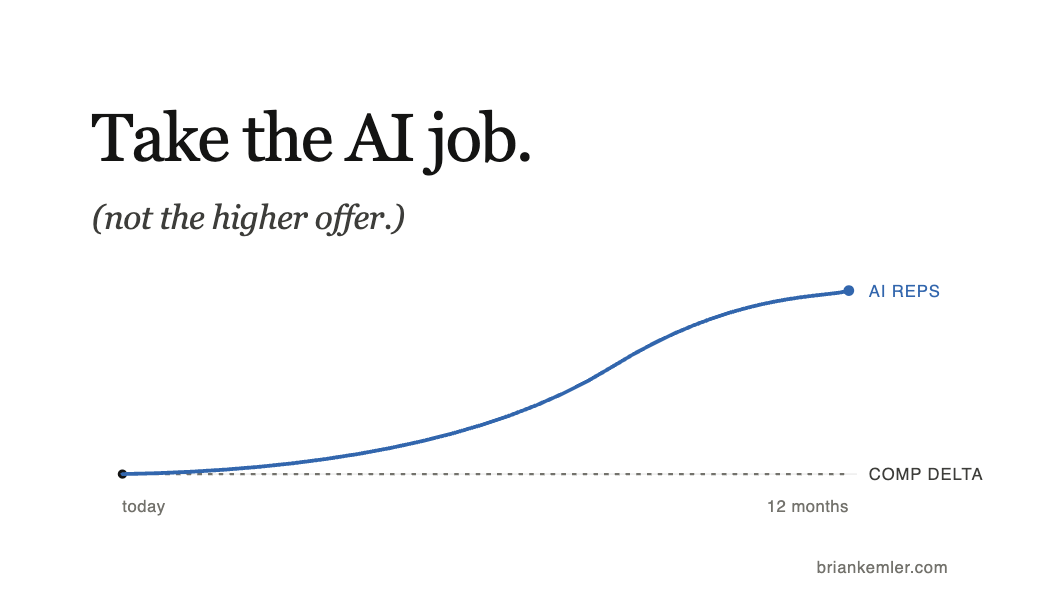
If you’re holding out for a 2021-style bidding war, you may be passing on something more valuable: a year of real AI shipping experience while the rest of the market is still figuring it out.
I’d take a down-level offer at a company with serious AI surface area over a lateral or up-level at a place where I’ll be writing PRDs the old way. One step back, two steps forward. The PMs who bank a year of AI practitioner reps in 2026 will be the AI PM leads every company is vying for in 2027… and the comp will follow.
What this looks like Monday morning
If you’re interviewing: weight roles by AI surface area, not just by level. Ask what the team actually ships with AI tools today, not what’s on the roadmap.
If you have an offer: don’t reflexively chase the highest number. Ask which role will let you build a portfolio of AI practitioner stories over the next twelve months.
If you’re employed: pick one feature this quarter and prototype it before you write the PRD. See what changes.
The asymmetry is real. A year of comp differential is a number. A year of practitioner reps changes what jobs you can get for the next decade.