
Wonder in the Pantanal, Brazil
Disconnecting from tech --> reconnecting to nature

Off in a remote corner of the southern hemisphere, there’s a place that still teems with primordial wonder.
It takes a long time and costs you in money and hassle to get here — but this may be what ultimately keeps it so splendid.
It’s called the Pantanal — the world’s largest tropical wetland, holding the greatest concentration of wildlife in South America, denser even than the Amazon to its north. It sits at the edge of Brazil, Bolivia and Paraguay.
I came here hoping to see a single jaguar — I saw 18 in two and a half days. I saw what could almost be called “flocks of hawks” — the usually solitary raptors teaming tree by tree, casting their downward gazes upon unsuspecting flying and swimming quarries.
I caught a glimpse of what our planet must have been like for millions of years until humans transmogrified it in the last ten thousand.
While we may never go back to a pre-Anthropocene epoch, my pilgrimage to the Pantanal reconnected me with animals, nature and the wonder of the universe. We are but part of this cosmos generally and this planet specifically. With this inspiring connection, I’ve found a renewed self-efficacy, determination and sense of wonder for nature.
No algorithm, no frontier model, no matter how capable, can or will ever outdo the splendor of a jaguar.
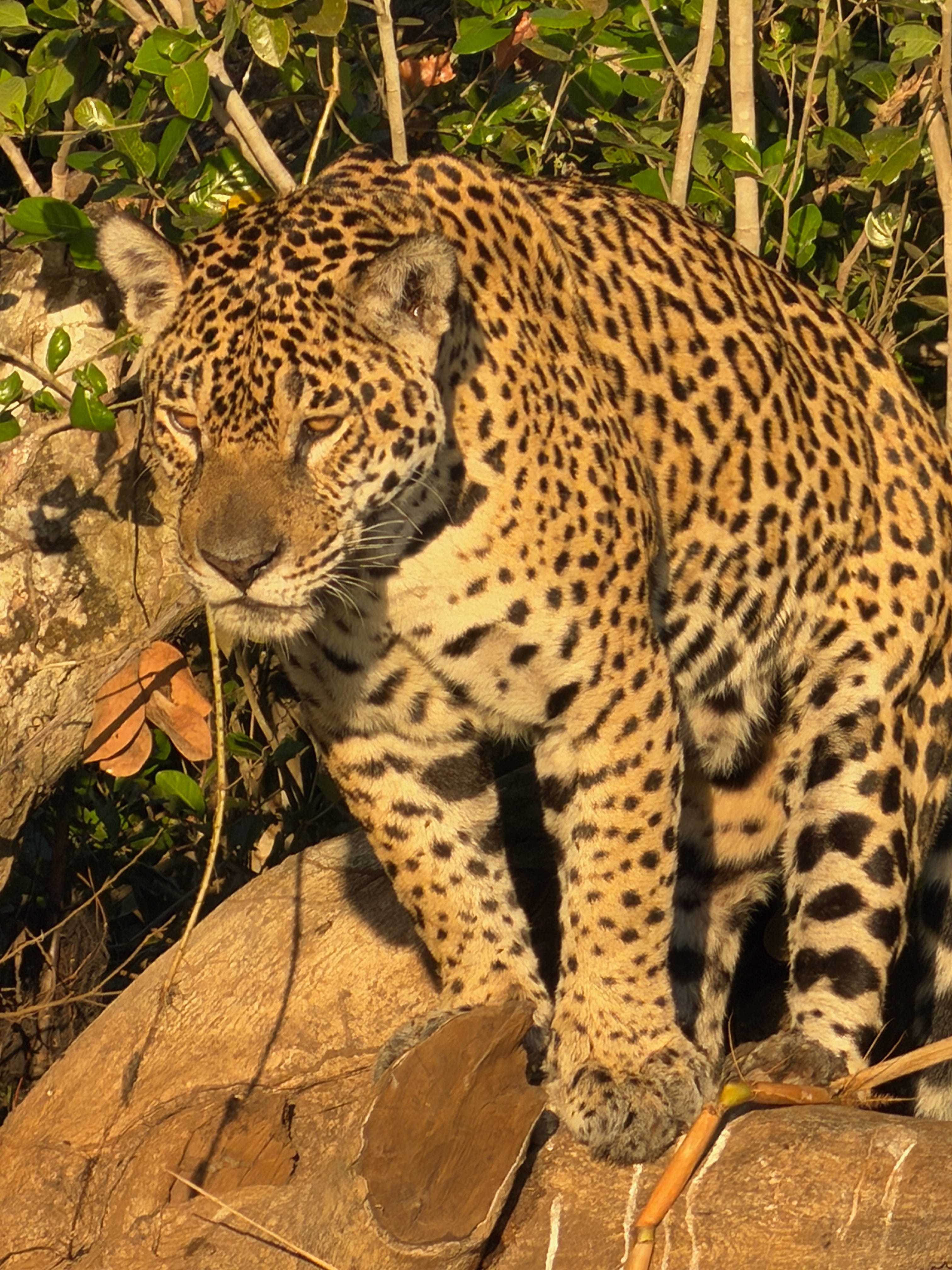
The world’s third largest cat, jaguars pack the most bite-pressure pound for pound. They can instantly snap a large mammal’s spine or puncture its skull, rendering death instantaneous.
With the same jaws, they can lovingly tote their cubs by the scruffs of their necks. I saw a jaguar successfully pull its kill — a 150+ pound capybara — up a 10-foot vertical ravine with unyielding determination.
As cute as capybaras are, I felt no sadness. Death in the jungle is the necessity of life. By contrast, I was saddened and shocked to see a dead capybara by the side of the highway. The line between necessary and unnecessary is the reason I don’t eat meat, as it is unnecessary for my own sustenance and well-being.
On a lighter note, I saw scores of other species, including silly caracaras, an abundant and playful falcon species that likes to run around on the ground like a chicken. I saw 11 hyacinth macaws — relative abundance given their threatened status.
Every night at my hotel in Porto Jofre, a parade of capybaras traipsed across the hotel grounds in a single line. Once, a wild foal played chase with baby capys. Capybaras are the world’s largest, cutest and most still rodents. There were probably 50 on the hotel property.
I had contrasting experiences with the two guides I hired: Janilson (name changed) and Vanderley. For me, they represented dueling approaches to our planet’s remaining wild places. In one, we take what we want, when we want it, however unnecessary. In the other, we take only what is necessary, and we do so with reverence for every creature.
Janilson drove recklessly at 3x the speed limit, threatening roadside wildlife while constantly texting. He knew nothing about the Pantanal, but everything about taking Instagram-ready shots of me (which I neither asked for nor wanted). He had a list of the top 5 most Instagrammable Pantanal animals, as if their value was solely a function of “likes.”
He took me on an expensive sham tour of an environmentally devastated fazenda when I could have spent a precious, additional half-day on the river, communing with the abundance of life as it has been and deserves to be.
Which takes me to Vanderley: my jaguar boat pilot, who spoke no English yet knew every species’ English name. I didn’t stump him a single time. He kept a mental catalog of what I had and hadn’t seen and would slow or stop the boat any time we encountered fauna I had not yet seen.
Vanderley cheered the jaguar’s haul as if his home team had scored a World Cup-winning goal. He piloted our boat with the utmost respect for animals, deftly slowing or navigating in deference to a caiman (an alligator relative) here or a tern there. He has no top five list and couldn’t care less about social media, yet he has the whole river in his head precisely because it’s necessary to his livelihood. He thus treats it with the reverence it deserves.
I have a good eye for spotting wildlife, especially raptors, but Vanderley spotted every one first. Sage would be one word to describe him, but as I think of him, he lives in a necessary harmony with nature we should all aspire to.